
Shopping con AI: opportunità, rischi e diritti
Prezzi, recensioni, privacy, trasparenza e tutela dei consumatori. Una guida europea per utilizzare l'intelligenza artificiale e acquistare con maggiore consapevolezza.

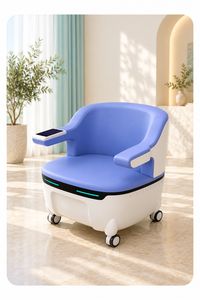
How does an electromagnetic stimulation chair work? This guide examines Wellness Chair S37-C, its stated features and precautions, separating muscle wellness information from therapeutic claims.
Considering Wellness Chair S37-C for your business? Contact Kalindra at kalindra.it for technical information, documentation and supply terms before making your decision
Look beyond the headline claims
Choosing wellness equipment means understanding how it works, its intended purpose and the needs of the person using it. Wellness Chair S37-C, called Model C in the manual, is presented as a chair using high-intensity focused electromagnetic stimulation with synchronized lumbar and gluteal output.
The document also links this system to pelvic floor stimulation. The pelvic floor and the buttock muscles are distinct areas: assessing a particular application requires clarity about the muscles involved and the settings used.
Technology and stated specifications
According to the manual, the electromagnetic field induces muscle contractions without voluntary movement. The lumbar and gluteal modules work together in an integrated operating mode. The user remains seated and clothed, with no gel required.
The specification table lists a 7-inch screen, AC 110–240 V supply, 300 Hz output frequency, unit dimensions of 65 × 75 × 82 cm and a weight of 30 kg. These are figures from the supplied document, to be confirmed for the purchased configuration. The stated frequency is not a clinically verified muscle contraction count.
Muscle wellness and reliable information
The manual describes muscle and posture wellness, while also making claims about pelvic floor rehabilitation, urinary incontinence and lower back pain. The same document states that the product is not a medical device and cannot replace diagnosis or treatment.
These claims are therefore not presented here as demonstrated outcomes for S37-C. Urinary symptoms, persistent pain or difficulties after childbirth call for a healthcare assessment. An electromagnetic chair should not automatically replace clinical care or prescribed exercises.
Before a session
The manual lists contraindications including pregnancy, metal or electronic implants, infections or wounds in the relevant area, bleeding-related conditions and several diseases. It also restricts use following surgery. This is only a partial summary: read the complete instructions and assess individual suitability. External metal objects and electronic items must be removed as instructed.
FAQ
What is Wellness Chair S37-C?
The manual describes it as muscle and posture wellness equipment using electromagnetic stimulation with synchronized lumbar-gluteal output.
Does the user need to undress?
The document describes use through clothing without gel. Instructions concerning clothing and metal objects still apply.
Can men and women use it?
The manual addresses adults of both sexes. This does not establish suitability for every individual; contraindications and personal circumstances must be checked.
How long is a session?
The manual mentions 15–30 minutes. Duration, intensity and frequency should follow current instructions and the operator’s assessment, rather than a generic blog schedule.
Does it replace Kegel exercises or physiotherapy?
An advertised contraction count does not establish equivalence to prescribed exercise. Do not replace a healthcare programme without discussing it with the relevant professional.
What should a buyer request?
The intended use, applicable conformity documentation, operating instructions, training arrangements, maintenance requirements, after-sales support and confirmation of the proposed model’s specifications.
At Kalindra, an informed purchase starts with understanding the equipment. Clear information, technology and personal care should guide every choice.
Behind Wellness Chair: design decisions and production culture
An interview with Caroline, Production Manager
Every piece of wellness equipment begins with people making decisions: how to develop an idea, organise the work and refine the details. To explore this perspective, Kalindra puts ten questions to Caroline, Production Manager. The conversation focuses on the work behind Wellness Chair, from collaboration between teams to the knowledge that supports consistent production.

Connecting the aims of the project with the practical work of each department. That means clarifying responsibilities, identifying difficulties and encouraging constructive conversations. Good coordination helps everyone understand how their contribution fits into the finished product and which decisions need to be made together.
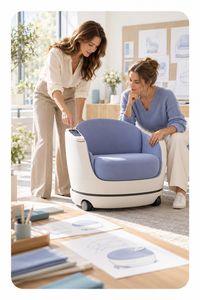
By translating the idea into clear requirements. A convincing prototype needs defined components and repeatable assembly operations. Essential knowledge should be shared, so that producing the intended result does not depend entirely on one person’s experience or on decisions improvised along the way.
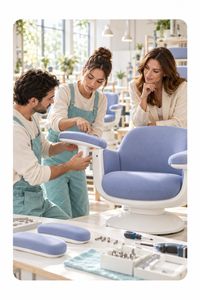
People who assemble equipment notice things that drawings may not reveal: awkward access, complicated sequences or parts that are difficult to position. Bringing those observations into the discussion early gives designers time to respond. A small practical insight can improve the way the whole product is built.

Cable routing, access to fixings and the arrangement of internal components deserve as much consideration as visible surfaces. Every element should have a clear place and purpose. Care in production extends throughout the product, including the areas that customers may never see during normal use.
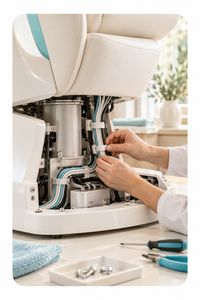
The component’s function comes first. Appearance, mechanical behaviour, suitability for manufacturing processes and continuity of supply need to be considered together. A material should meet the requirements of the design; its visual appeal alone is not enough to make it the right choice.
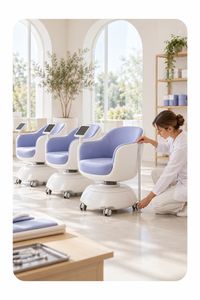
By defining which characteristics need to remain constant and how they will be checked. Customers expect the product to match the intended configuration. Recognising and understanding variations provides a clearer basis for repeatable results and for decisions made during production.
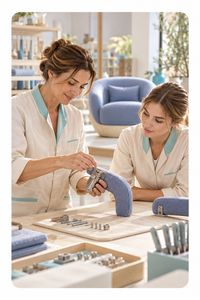
First, establish the problem it is meant to solve. Then examine its effects on the other components and operations. Even a small change can influence assembly or compatibility. Before introducing it, the decision should be shared and the information used by the relevant departments updated.
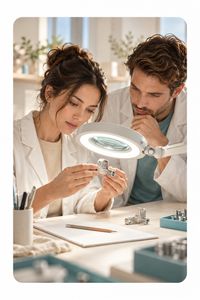
Describe it accurately and investigate its cause. Correcting the immediate case matters, but understanding why it happened helps prevent recurrence. People should feel that reporting a difficulty contributes to better work and that their observations will be taken seriously.
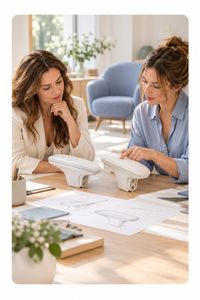
It helps people understand the purpose of each operation. Knowing the steps is useful; understanding why a particular step matters supports more informed work. Sharing that knowledge also helps preserve skills when colleagues, tools or working arrangements change.
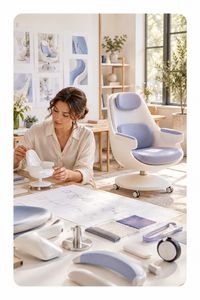
Identify concrete improvements and assess their practical value. Easier assembly, a more intuitive interface or better coordination between components may deserve priority. Every development should respond to a recognisable need and pursue an objective the team can explain and evaluate.
Conclusion
The production perspective reveals the work that comes before the finished product: collaboration, material choices, carefully considered changes and people’s skills. For Kalindra, understanding these decisions adds depth to an informed choice and brings readers closer to the people behind the equipment.
Follow the Kalindra Blog Magazine at kalindra.it to discover the people and projects behind the products.