

Shopping con AI: opportunità, rischi e diritti
Prezzi, recensioni, privacy, trasparenza e tutela dei consumatori. Una guida europea per utilizzare l'intelligenza artificiale e acquistare con maggiore consapevolezza.

Follow the Development of the K-Air 79 Air Ambulance
The K-Air 79 Pilatus PC-24 Air Ambulance project has begun.
In future articles, we will follow the evolution of the cabin configuration, aeromedical solutions, aircraft features and the different stages leading towards the completion of the project.
Follow K-Air 79 and Kalindra Italia. The next chapter is already taking flight.
When Flying Means Saving Lives: From Air Ambulance History to the K-Air 79 Project
Some flights simply take people to a destination.
Others carry a very different responsibility.
They can mean reaching a specialist hospital.
Bringing a patient safely back to their home country.
Connecting someone with the medical care they need.
Turning thousands of kilometres into just a few hours.
Needs such as these gave rise to aeromedical aviation.
It is a story of medicine, technology, courage and innovation that has accompanied aviation almost from its earliest days.
Today, K-Air 79 is preparing to write a new chapter in that story:
K-Air 79 has selected the Pilatus PC-24 as the platform for its Air Ambulance project.
The Origins: When Aircraft Became a Means of Rescue
At the beginning of the twentieth century, aviation itself was still experimental.
Yet almost as soon as powered flight became possible, pioneers began to understand that aircraft might accomplish something far more important than transporting passengers or cargo: they could help bring injured people closer to medical care.
During the First World War, practical forms of aerial medical evacuation began to emerge.
Aircraft originally designed for other purposes were adapted to carry casualties.
These early solutions were worlds apart from modern medical aviation, yet they already embodied the principle that would define the future of aeromedical transport:
reduce the time separating a patient from the care they need.
War Accelerates Aeromedical Development
The Second World War dramatically accelerated this evolution.
Larger aircraft, increased range, improved reliability and better medical organisation made it possible to transport casualties over distances previously unimaginable.
More importantly, the philosophy itself began to change.
Patients should not simply be transported.
They should be cared for during transport.
Specially trained medical personnel and dedicated aeromedical procedures progressively became part of evacuation missions.
The aircraft was becoming an integral part of the healthcare chain.
From Medical Evacuation to the Modern Air Ambulance
During the following decades, aviation and medicine made extraordinary advances.
Pressurised cabins, more reliable engines, increased range and increasingly compact medical technology made something possible that would once have seemed extraordinary:
providing ongoing medical care while transporting a patient across countries and continents.
The modern concept of the Air Ambulance emerged.
Not simply an aircraft carrying a stretcher.
Rather, an aircraft configured so that the patient, medical team, specialist equipment and flight operations can function together as part of one coordinated mission.
Time Becomes Distance. Distance Becomes Opportunity.
In international medical transport, the challenge is not simply how far away the destination is.
The entire transfer chain must be considered.
Where is the patient?
Which suitable airport is closest?
How long will the ground ambulance transfer take?
Which hospital will receive the patient?
What medical team is required?
What medical configuration is appropriate for the patient's condition?
This is precisely why selecting the right aircraft matters.
For its new project, K-Air 79 has selected an aircraft with some very distinctive characteristics:
PILATUS PC-24
The Super Versatile Jet
Pilatus Aircraft calls the PC-24 “The Super Versatile Jet.”
Its design philosophy combines the performance expected from a business jet with an unusual degree of operational versatility.
This philosophy is one of the key reasons why the aircraft attracted the attention of K-Air 79.
Because in aeromedical transport, the question is not only how fast an aircraft can fly.
It is also:
how close can it get to where it is needed?
Short Runways and Unpaved Surfaces
One of the PC-24's defining characteristics is its certified capability, under the appropriate operating conditions, to use short runways and certain unpaved surfaces.
For aeromedical missions, this versatility can potentially expand the number of airports available for mission planning.
Where operationally possible, using an airport closer to the patient or receiving healthcare facility may help reduce the ground-transfer portion of the journey.
It changes the perspective from simply asking:
“How quickly can we fly?”
to also asking:
“How close can we get?”
A Door That Can Make a Difference
The PC-24 also has a particularly significant feature for special-mission configurations: its large cargo door.
Pilatus specifies dimensions of approximately 1.25 metres wide and 1.30 metres high.
In conventional operations, this provides exceptional cargo-loading flexibility.
In an aeromedical configuration, however, it takes on an entirely different significance.
Dedicated patient-loading systems can make transferring a stretcher into and out of the aircraft considerably more practical.
When the person being moved is a patient, accessibility and ergonomics are no longer simply technical specifications.
They become part of the mission.
A Cabin Designed for Transformation
The PC-24 features a pressurised, highly adaptable cabin with a continuous flat floor.
Pilatus has already developed dedicated Air Ambulance and Medevac configurations for the aircraft.
Depending on the chosen layout, documented aeromedical configurations can accommodate up to three stretcher patients, together with the required medical personnel.
Dedicated solutions can also integrate medical oxygen, vacuum, electrical power and specialist medical equipment.
This is an important element behind the K-Air 79 decision.
The project is not beginning with an ordinary business jet with no previous aeromedical background.
It is beginning with an aircraft platform that already has real-world experience in international medical aviation.
Royal Flying Doctor Service: Proven Aeromedical Experience
Among the organisations operating the PC-24 in an aeromedical role is Australia's Royal Flying Doctor Service, one of the world's best-known aeromedical organisations.
For these missions, a dedicated PC-24 Medevac interior was developed in cooperation with Swiss specialist Aerolite.
Australia provides a particularly demanding operational environment, where connecting remote communities with major healthcare centres can require aircraft capable of combining speed with exceptional operational flexibility.
The PC-24 has also been adopted for aeromedical operations in Europe.
These real-world applications demonstrate that its suitability for medical transport extends well beyond theory.
Speed and Range
An Air Ambulance must be versatile, but it must also be fast.
Pilatus specifies a maximum cruise speed of up to 440 KTAS for the PC-24.
For the Air Ambulance configuration, the manufacturer indicates a maximum range of approximately 2,040 nautical miles, naturally dependent on payload, configuration, weather, reserves and mission planning.
These are important figures.
But K-Air 79 intends to look beyond the figures.
Because an aeromedical mission cannot be measured solely in knots and nautical miles.
Its effectiveness depends upon the efficiency of the entire patient-transfer chain.
The K-Air 79 Air Ambulance Project Takes Shape
This is the vision behind the new K-Air 79 Air Ambulance project.
Selecting the Pilatus PC-24 represents the first major component of a broader aeromedical strategy.
The objective is to develop an aircraft specifically configured around the medical missions envisaged by K-Air 79, bringing together the necessary aviation, technical and medical expertise while complying with all applicable certification and operational requirements.
Three principles will guide its development:
Safety.
Professionalism.
Care for the individual.
Behind Every Mission Is a Person
When discussing aircraft, it is easy to focus on performance.
Engines.
Range.
Speed.
Avionics.
Runways.
But an Air Ambulance is different.
At the centre of its mission is not the aircraft.
It is a person.
A patient who needs to reach a healthcare facility.
A family waiting for news.
Doctors and nurses who need an appropriate environment in which to work.
Pilots and aviation professionals responsible for planning and safely completing the flight.
Ground teams.
Ambulances.
Hospitals.
Airports.
Every aeromedical mission is a chain.
Every link matters.
Europe, the Mediterranean and Beyond
Italy's geographical position provides an interesting base for the development of international aeromedical connections.
Central and Southern Europe, Mediterranean islands, the Balkans and North Africa form a geographical area in which significant distances can be covered rapidly by air.
Where operationally appropriate, missions to more distant destinations may also be considered with the necessary technical planning.
Every mission must naturally be assessed individually according to the patient's condition, medical-team requirements, airport availability, required range, weather and applicable authorisations.
Not Simply an Aircraft. A Project.
K-Air 79 does not intend merely to place a medical symbol on the fuselage of a jet.
The objective goes much further.
To progressively create a project in which aviation, medicine, logistics and patient assistance work together.
The Pilatus PC-24 will represent the aviation heart of this system.
The organisation must then be built around the aircraft.
Because the quality of an aeromedical service never depends solely on the aircraft.
It depends upon the people and expertise that make every mission possible.
More Than a Century Later, the Mission Continues
More than one hundred years separate the first aircraft carrying wounded patients from today's advanced aeromedical jets.
Aircraft have changed.
Medicine has changed.
Medical equipment has changed.
Operational possibilities have changed.
One thing, however, remains remarkably constant.
The objective:
to reduce the distance between a person and the medical care they need.
It is one of aviation's most extraordinary purposes.
And it is within this history that K-Air 79 intends to write its next chapter.
K-AIR 79 – PILATUS PC-24 AIR AMBULANCE
A new project is taking shape.
A project in which technology and professionalism will serve an even greater mission:
putting aviation at the service of people.
An Air Ambulance is an aircraft configured for medical transport, enabling appropriately qualified healthcare professionals to care for patients during flight according to their clinical requirements and the available medical configuration.
K-Air 79 has selected the Pilatus PC-24 as the platform for its Air Ambulance project.
Key considerations include its combination of speed, operational versatility, large cargo door, adaptable cabin and certified ability, under appropriate conditions, to operate from short runways and certain unpaved surfaces.
Yes. The PC-24 is already used for aeromedical operations by international operators, including Australia's Royal Flying Doctor Service.
PC-24 Air Ambulance configurations can accommodate up to three stretcher patients. The final K-Air 79 configuration will depend upon the selected medical interior and will be announced as the project develops.
The project is being developed with an international perspective. Specific missions, operating regions and available services will be defined according to the final operating structure and applicable authorisations.
Exclusive Interview with Captain Massimiliano “Max” Giusti
The Human Responsibility Behind Every Flight
A captain is much more than the person operating an aircraft.
The role involves interpreting complex situations, making responsible decisions and ensuring that every flight is conducted within the highest applicable safety standards.
In aeromedical transport, these responsibilities take on an additional human dimension.
Through its K-Air 79 Air Ambulance project, Kalindra Italia aims to develop an operation in which aviation expertise, medical coordination and respect for people work together.
In this proposed interview, Captain Massimiliano “Max” Giusti explores the operational philosophy behind the initiative, moving beyond the aircraft specifications already discussed in our previous article.

The greatest difference is awareness of the wider mission. Every flight demands professionalism, but aeromedical transport is part of a healthcare process. The captain must maintain the same uncompromising flight-safety standards while understanding that vulnerable people may be on board. Greater responsibility should lead to better decisions, never greater risk-taking.

Safety must never become negotiable. Medical urgency cannot be allowed to create unsafe pressure on the flight crew. A mission should proceed only when the necessary aviation, technical and operational conditions have been satisfied. This principle must remain clear regardless of the circumstances.
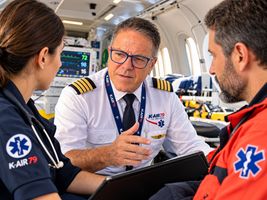
It is essential. The captain is responsible for flight safety, while medical professionals manage clinical decisions and patient care. Their responsibilities are different but closely connected. A structured preflight briefing should identify any patient-related requirements that could influence flight planning, cabin arrangements or operational decisions.
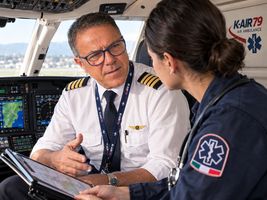
From an aviation perspective, we need reliable information about the route, suitable airports, weather, timing, ground arrangements and operational constraints. Medical professionals should manage clinical information and share only what is necessary for safe flight planning. Clear communication at the beginning prevents unnecessary difficulties later.
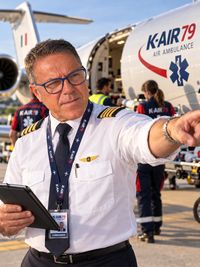
With empathy, clarity and professional firmness. Families may be facing extremely difficult circumstances, and their urgency deserves respect. However, emotional pressure cannot override safety requirements. A carefully organised transfer is more valuable than a rushed departure that introduces avoidable risks.
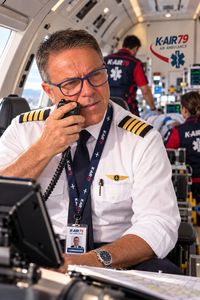
Because every mission involves multiple professionals and organisations. Everyone must understand their responsibilities, the relevant contact points and the information they need to provide. Aviation coordination and medical communication should be managed by the appropriate professionals. Clear communication reduces misunderstandings and preventable delays.
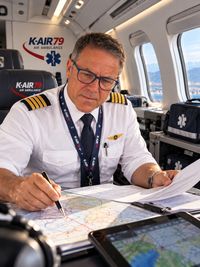
It means creating an environment where people can report concerns without fear of being unfairly blamed. Potential errors, unusual events and operational difficulties should be examined constructively. Procedures are vital, but so are training, openness and continuous improvement. Safety culture is demonstrated through everyday behaviour.
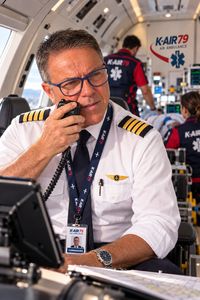
Extremely important. Crew members must remain composed under pressure while retaining empathy and awareness. Emotional control does not mean indifference. It means being able to listen, evaluate information and make disciplined decisions. Human-factors training and effective crew resource management are essential.
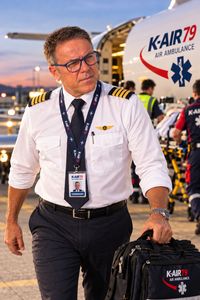
With discretion and clearly defined responsibilities. Personal and medical information must only be accessed or shared when necessary and authorised. The patient deserves dignity and privacy throughout the transfer. Professional confidentiality is not an optional courtesy; it is part of responsible service.

Through training, simulation and disciplined procedures. We cannot predict every event, but we can prepare structured responses. When circumstances change, the crew must reassess priorities, communicate effectively and adapt the operational plan. Preparation allows people to remain methodical under pressure.
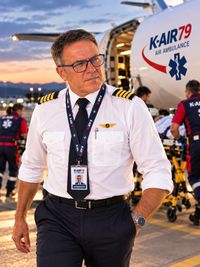
Because responsible command sometimes means deciding not to depart. A mission may need to be delayed, rerouted or cancelled when conditions are unsuitable. Professional courage is not about completing a flight at any cost. It is about recognising when a different decision is necessary.
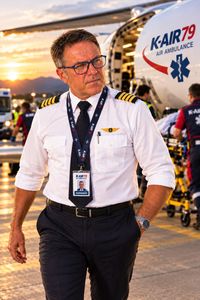
Modern aviation technology offers exceptional support, from navigation systems to operational planning tools. But technology does not eliminate the need for experienced judgement. Information must be interpreted correctly, limitations understood and decisions made responsibly. Technology should strengthen professional competence, not replace it.
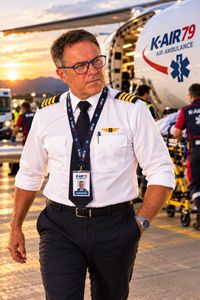
Reliability, integrity, professionalism and teamwork. An aeromedical organisation should not judge itself solely by the number of flights completed. The quality of its decisions, the consistency of its standards and the trust it earns are equally important. Credibility is built through actions.
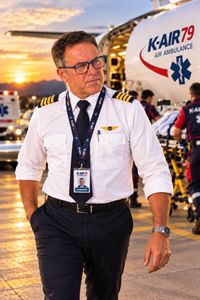
Individual expertise matters, but teamwork matters just as much. Pilots, physicians, nurses, engineers and operational coordinators must respect each other's responsibilities. Complex medical transfers cannot be delivered successfully by one person alone. Cooperation is a fundamental professional skill.
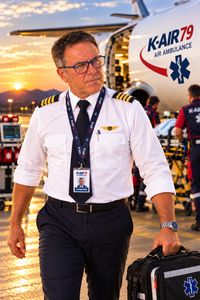
It represents an opportunity to apply aviation knowledge and organisational discipline to a meaningful purpose. The project should develop carefully, with clear milestones and realistic commitments. Ambition must never be confused with completed achievements. If safety and respect for people remain central, the foundations will be strong.
Conclusion – Responsible Decisions Define Professional Aviation
This proposed conversation highlights a fundamental principle: successful aeromedical transport begins with preparation, not improvisation.
Flight safety, medical coordination, confidentiality, professional training and responsible leadership must all contribute to the development of the K-Air 79 project.
The Pilatus PC-24 is the selected aviation platform. The people, systems and standards developed around it will determine the quality of the future operation.
K-Air 79 Air Ambulance: where aviation responsibility begins with respect for people.
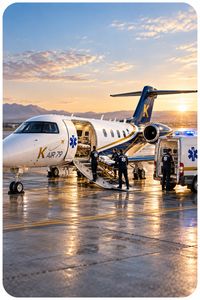
For more than a century, aviation has shortened the distance between patients, medical teams and healthcare facilities. From the earliest casualty evacuation flights to today's sophisticated Air Ambulance operations, aviation and medicine have learned to work together. Today, that history enters a new chapter as K-Air 79 begins its project to configure a Pilatus PC-24 for aeromedical transport.