

Bonturi Casa: profumi, candele naturali e tisane Bio
Scopri Bonturi Casa e Nature Candle: candele profumate in cera vegetale, fragranze per ambiente e tisane biologiche per vivere la casa attraverso i sensi.

K Air 79: Private Flying Where Time Is the Real Luxury
Discover K Air 79 and a new approach to private flying: executive mobility built around the passenger, where private jets, organisation and service share one goal – helping people make better use of their time.
K Air 79: A New Vision of Private Flying
In the world of private aviation and business aviation, K Air 79 was created with a clear philosophy: to transform private jet travel into an efficient, flexible and personalised mobility solution.
It is not simply about flying faster. It means rethinking the entire journey around the needs of the individual.
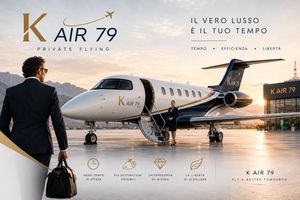
The K Air 79 philosophy focuses on three concepts:
Time. Efficiency. Freedom.
The principle is simple: build the flight around the passenger's needs rather than forcing the passenger to adapt to the aircraft.
It is an approach to private flying and executive mobility designed for entrepreneurs, executives, professionals, companies and private travellers seeking greater control over their travel arrangements.
Pilatus PC-24: Versatility and Performance
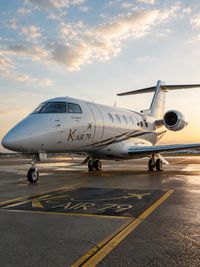
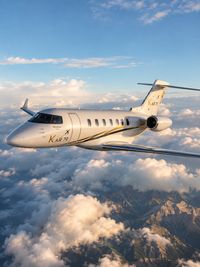
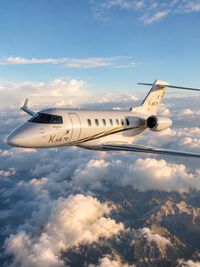
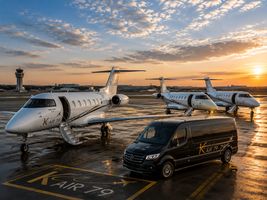
At the heart of the K Air 79 project is the Pilatus PC-24, the Swiss business jet described by Pilatus as the “Super Versatile Jet”.
The choice reflects the company's philosophy: combining speed, comfort and operational versatility. The PC-24 has a stated maximum cruise speed of 440 KTAS, approximately 815 km/h, a certified maximum altitude of 45,000 feet and a range of up to 2,000 nautical miles, approximately 3,704 km with six passengers, under the conditions specified by the manufacturer.
One of its distinctive characteristics is its ability to operate from relatively short runways and, under the appropriate conditions and configurations, from certain unpaved surfaces.
For private jet mobility, this expands operational possibilities and makes it possible to consider airports potentially closer to the final destination.
The K Air 79 concept therefore becomes:
bring the aircraft closer to the passenger, not the passenger to the aircraft.
The Real Luxury Is Time
Aircraft speed is only one element of travel efficiency.
A private flight should be evaluated by considering the entire journey: transfer to the airport, departure procedures, flight, arrival and onward travel to the final destination.
Reducing waiting times and transfers can fundamentally change the travel experience.
For an entrepreneur, a business jet may make it possible to attend several meetings in one day. For a company, it can make the mobility of executives and employees more efficient. For private travellers, it can mean having more time for people and destinations.
For K Air 79, luxury is therefore not simply about exclusivity.
The real luxury is time: time saved, time used more effectively and the freedom to organise travel around your own schedule.
An Experience Built Around the Passenger
Contemporary private aviation is about much more than aircraft. Organisation, hospitality, service, comfort and attention to detail all contribute to the overall quality of the journey.
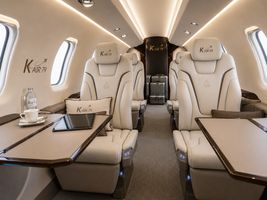
The flexible cabin of the Pilatus PC-24 fits naturally into this vision, with configurations capable of responding to different missions and requirements.
On an executive journey, the space can support work and conversations; on a private trip, it can encourage relaxation and shared moments.
Exclusivity therefore becomes service personalisation.
A Fleet Close to Those Who Fly
The K Air 79 strategy also considers aircraft positioning essential. The objective is not simply to have more jets, but to have the right aircraft, in the right place, when it is needed.
An efficiently organised network can reduce unnecessary repositioning and waiting times.
Fleet development follows the same principle. Range, passenger numbers, destination and mission characteristics should determine the choice of aircraft.
The mission comes first. Then we choose the aircraft. Never the other way around.
This is where K Air 79, private jets, Pilatus PC-24, business aviation, executive flights, European private aviation and corporate mobility converge into one vision: putting the aircraft at the service of the individual.
Not simply flying privately, but travelling better.
K Air 79. Time. Efficiency. Freedom.
FAQ
What is K Air 79?
K Air 79 is a project dedicated to private flying and executive mobility, based on time, efficiency, freedom and personalised travel.
Which aircraft is central to K Air 79?
The project is centred around the Pilatus PC-24, a Swiss business jet known for its performance and operational versatility.
Who is K Air 79 designed for?
Entrepreneurs, executives, companies, professionals and private travellers seeking greater flexibility in organising their journeys.
What is the K Air 79 philosophy?
To build the flight around the passenger. For K Air 79, true luxury means making better use of the most valuable resource: time.
Interview with Massimiliano “Max” Giusti: Behind the Scenes of Command at K Air 79
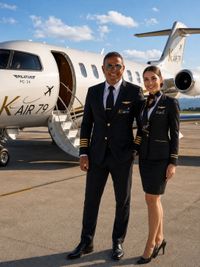
Being a captain means much more than flying an aircraft. It means making decisions, coordinating people, anticipating situations and building a culture in which competence, discipline and responsibility work together every day.
We step into the cockpit of K Air 79 with Captain Massimiliano “Max” Giusti to discover a side of aviation passengers rarely see: preparation, teamwork, professional judgement and the ability to manage the unexpected.
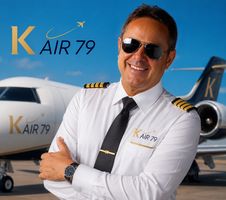
Responsibility towards people.
Before the aircraft, the procedures or the destination, you know that someone has entrusted their journey to you and the crew. That completely changes the way you experience the role.
Being... Read More
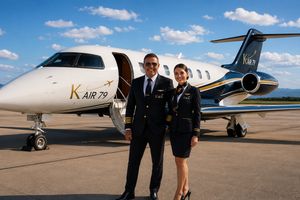
Both are essential, but with experience the quality of decision-making becomes increasingly important.
Technical skills are built through study, training and practice. Professional judgement also develops through the ability to assess many pieces of information... Read More
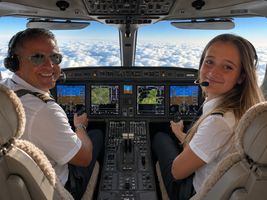
Leadership in the cockpit should not be authoritarian.
A captain needs to create an environment where the co-pilot can express a doubt, suggest an alternative or point something out without hesitation.
If someone... Read More
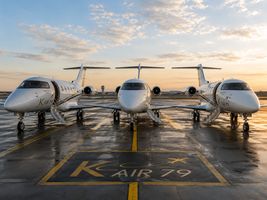
Extremely important.
A cockpit does not need two people independently doing the same job. It needs a crew working as a system.
That means dividing responsibilities, communicating precisely, cross-checking and anticipating... Read More
Absolutely not.
Experience does not replace procedures; it should make us understand their importance even more.
A checklist does not exist because a pilot cannot remember what to do. It exists because it introd... Read More
Weather is not something to “challenge”. It is a variable to understand and manage.
Preparation means looking not only at what is happening now, but also at what could happen as the flight develops.
Weather forecasts... Read More
Consistency.
It is not enough to be technically excellent on one particular day. High standards must be maintained continuously, even when you are tired, when everything appears simple or when nobody is watching.
A... Read More
Perhaps even more important.
Recurrent training keeps skills fresh that may rarely be required during normal operations.
In the simulator we can face abnormal situations, emergencies and combinations of events that... Read More
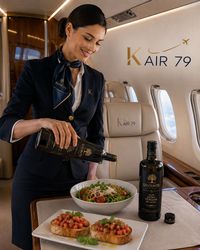
First of all, by maintaining mental order.
Complex situations rarely improve when approached with haste or agitation. Priorities must be established, tasks divided and communication kept clear and essential.
Being... Read More
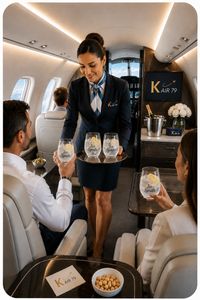
More than passengers might imagine.
Pilots and cabin crew perform different roles, but they belong to the same crew. Operational information, specific requirements, flight conditions or changes must be shared whenever necessary.
A... Read More
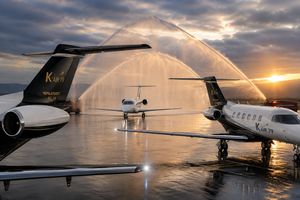
Absolutely.
In private aviation we may fly entrepreneurs, executives, families or people who simply want to travel without exposure.
A crew can inevitably become aware of destinations, appointments or personal h... Read More
I would say differently important.
Automation and modern avionics allow us to manage information and systems with extraordinary levels of precision. But as systems become more sophisticated, pilots must understand them deeply.
We... Read More
I would rather call it experience.
What sometimes appears to be instinct is often the result of thousands of situations observed over time.
A small detail can make us feel that something deserves closer attention... Read More
Not to be in a hurry to become one.
First, you should want to become a good pilot, then a good crew member, and eventually someone capable of taking responsibility.
Studying English, technology, meteorology and human... Read More
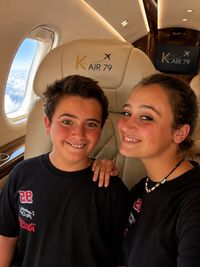
When everything felt natural to the passenger.
Behind that day there may have been dozens of checks, decisions, coordination activities and small changes of plan. But when the crew has worked well, much of that complexity remains invisible.
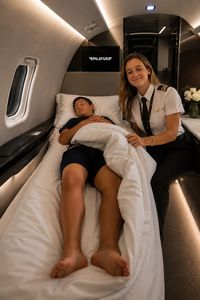
It depends on your point of view.
Those who are relaxing certainly get to enjoy the view, the cabin and perhaps something good to drink. Those who are working, on the other hand, have the privilege of taking everyone safely to their destination and experiencing... Read More
Conclusion
Our conversation with Massimiliano “Max” Giusti offers a different perspective on K Air 79. Not that of the passenger, nor that of aircraft performance, but that of the people who turn procedures, technology, preparation and coordination into a flight every day.
One word emerges above all from the cockpit: responsibility.
Responsibility in decision-making, communication, maintaining standards and creating a crew in which every professional can contribute to safety and operational quality.
Because behind every flight that appears simple lies work that is anything but simple.
K Air 79 – Behind every journey, people and expertise.
Kalindra – Editorial Team and Press Office.
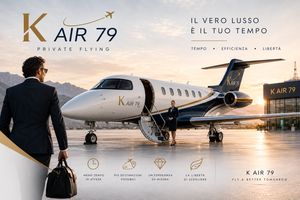
Private flying, business aviation and the Pilatus PC-24 come together in a new approach to mobility. K Air 79 puts the passenger at the centre and interprets travel through three principles: time, efficiency and freedom.